
What Is a Basic Health Checkup and Who Should Get It?
Introduction
Most people only go to the hospital when something is wrong because they are so busy. But a lot of serious health problems, like diabetes, high blood pressure, thyroid disorders, and heart disease, don't show any signs until they're too late. A basic health checkup can help find these problems early, sometimes even before symptoms show up.
Stress, bad eating habits, and not getting enough exercise are causing more lifestyle-related diseases in cities like Jodhpur and all over Rajasthan. The World Health Organization (WHO) says that almost 74% of all deaths in the world are caused by non-communicable diseases like heart disease and diabetes. Many of these conditions are preventable with timely routine health tests and regular preventive checkups.
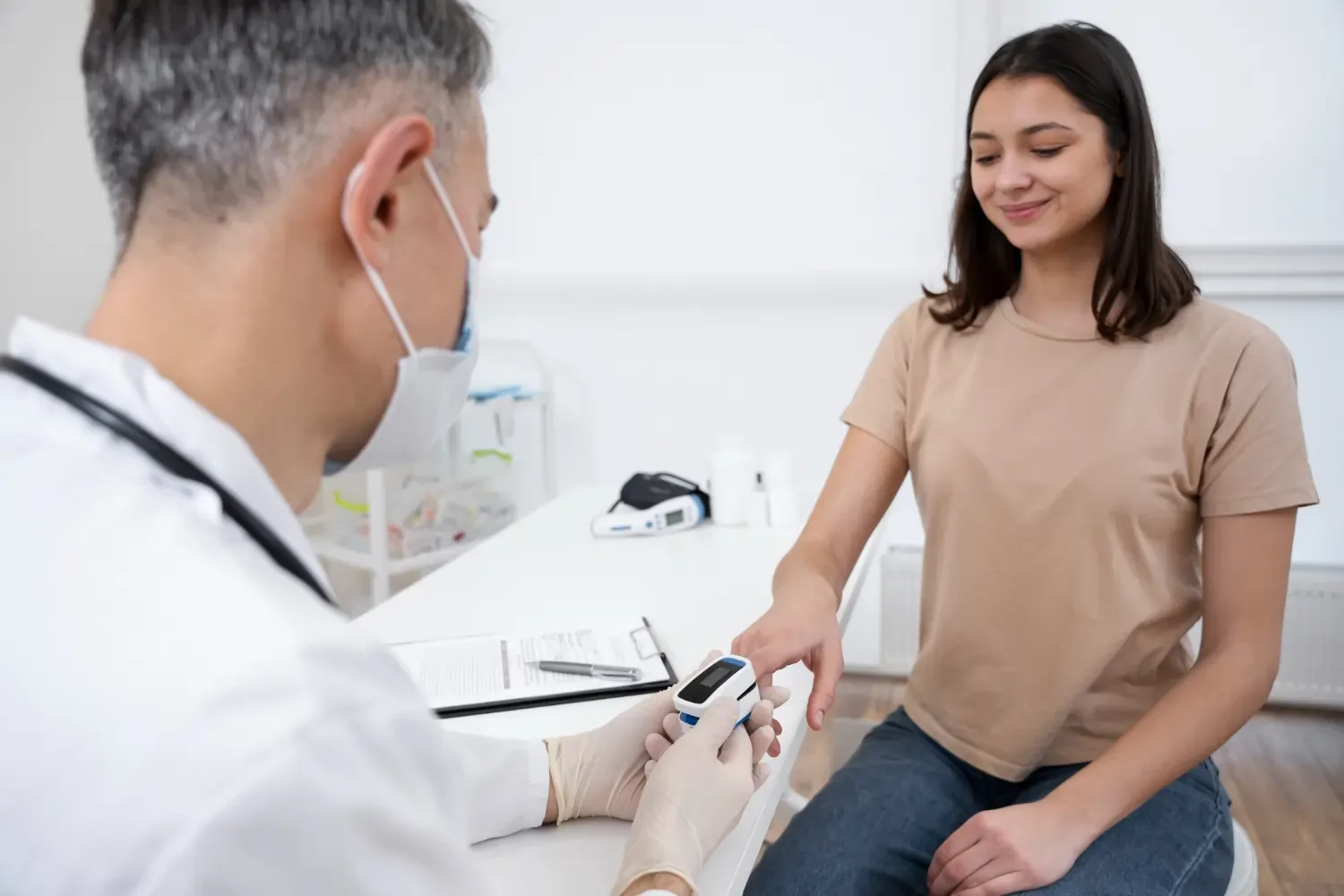
The image shows a doctor performing a finger test on a woman during a basic health checkup, highlighting the importance of monitoring vital health parameters. It represents essential routine health tests and regular preventive checkups to maintain overall wellness and ensure accurate health screening reports during a normal health checkup.
This Guide Will Teach You:
What a basic health checkup is all about
Who should have a health checkup
Signs of trouble that you shouldn't ignore
How finding out about a disease early can save lives
Why people trust JIET Hospital for preventive care
What a Basic Health Checkup Is
A basic health checkup is a medical exam that looks at your overall health to help you stay healthy. Think of it as getting your car ready for a breakdown. A routine health test checks to see if your body's systems are working properly instead of waiting for you to get sick.
A normal health checkup usually includes:
Complete Blood Count (CBC)
Blood Sugar (Fasting and After Eating)
Lipid Profile (Levels of Cholesterol)
Test for Liver Function
Test for Kidney Function
Profile of the Thyroid
Routine Urine Test
Checking blood pressure and BMI
Depending on age and risk factors, some packages may also include an ECG or chest X-ray.
The goal of a preventive checkup is to find problems early. Conditions like high cholesterol and high blood pressure often don't show any signs, but they make it much more likely that you will have a heart attack or stroke.
Reasons and Risk Factors for Needing Regular Health Checks
Some people are more likely than others to get lifestyle diseases. The Centers for Disease Control (CDC) and Prevention says that adults who are overweight, don't get enough exercise, and have a family history of chronic illness are more at risk.
If you:
Are older than 30
Have a family history of heart disease or diabetes
Smoke or drink alcohol on a regular basis
Be under a lot of stress
Are too heavy
Live a sedentary life
There has been a quick rise in diabetes cases in India. The International Diabetes Federation says that more than 100 million people in India have diabetes. Routine health tests can help find problems early, which can keep them from getting worse.
Symptoms & Warning Signs
Many health problems have symptoms that aren't very clear at first but get worse over time.
Signs of Trouble Ahead:
A lot of tiredness
Weight gain or loss that can't be explained
Headaches that don't go away
Thirstier
Heartbeats that aren't regular
A little pain in the chest
Signs of an Advanced Warning:
Very bad chest pain
Vision that isn't clear
Legs that are swollen
Breathlessness
High blood pressure that doesn't go away
If you have any of these, you should see a doctor right away. Even if you don't have any symptoms, you should still get a yearly checkup.
Tests and Diagnosis
A basic health checkup is easy and usually only takes a few hours.
The steps are:
Examination of the body
Taking a blood sample
Testing a sample of urine
Watching vital signs
Automated analyzers are used in modern labs to get quick and accurate results. Most of the time, reports are ready within 24 hours. Advanced diagnostic tools at JIET Hospital make sure that health screening reports are accurate and trustworthy.
Available Treatment Options
If your routine health test shows any problems, the treatment will depend on what is wrong.
Conservative Management:
Changes to the diet
Working out regularly
How to deal with stress
Change in lifestyle
Managing health care:
Drugs for high blood pressure
Medications for managing diabetes
Hormone therapy for the thyroid
Drugs that lower cholesterol
Advanced Care (If Needed):
Heart evaluation
Consultation with a specialist
More imaging tests
Finding the problem early makes treatment more likely to work and less likely to cause problems.
Why JIET Hospital in Jodhpur?
Choosing a good hospital is important when it comes to preventive health care.
Patients at JIET Hospital in Jodhpur get:
Doctors and specialists with a lot of experience
Diagnostic protocols that meet NABH standards
Advanced lab infrastructure
Preventive checkup packages that don't cost too much
Care and counseling that focuses on the patient
Easy to get to in the city
JIET Hospital is different from other hospital blogs because it focuses on personalized care, easy access in the area, and clear reporting.
Advice on How to Live a Healthy Life and Avoid Problems
One way to stay healthy is to get a checkup every year. Daily habits are just as important.
These simple tips will help:
Get at least 30 minutes of exercise every day.
Eat a healthy diet that includes a lot of fruits and vegetables.
Cut down on sugary and processed foods
Stay away from tobacco
Get 7 to 8 hours of sleep every night.
Drink enough water
Check your blood pressure on a regular basis. The World Health Organization (WHO) says that adults should get checked every 1 to 3 years, depending on their age and risk factors.
Questions and Answers
Q1: How often should I have a basic health checkup?
Adults over 30 should get a checkup every year to be safe. People under 30 can test every 2–3 years unless they are at high risk.
Q2: Do you have to fast before a regular health test?
Yes, you need to fast for 8 to 12 hours to get accurate blood sugar and lipid profile results.
Q3: How long does it take to get a health screening?
Most simple health checkups take 2 to 3 hours to finish.
Q4: Is it safe for pregnant women to get checkups to prevent problems?
Yes, but you should only do certain pregnancy-related tests under medical supervision.
Q5: Does insurance pay for checkups that are meant to prevent problems?
Some insurance plans include annual health screening benefits. Check with your provider.
Q6: When is the best time to start getting regular health checkups?
It is best to start regular screenings after the age of 30.
In Conclusion
Your health is your greatest asset. A basic health checkup can help find diseases early, stop them from getting worse, and give you peace of mind. Pick prevention instead of waiting for symptoms.
Make an appointment for your regular health checkup at JIET Hospital in Jodhpur today and take a step toward a healthier future.
You can call now or set up your preventive checkup online.
Disclaimer: This article is for informational purposes only and does not replace professional medical advice. Always consult a qualified healthcare provider at JIET Hospital for diagnosis, health checkups, or treatment tailored to your needs.


