
Ringworm vs Eczema: How Are They Different
Red, itchy, or irritated skin can be uncomfortable and worrying, especially when you are unsure what is causing it. Ringworm and eczema are two common skin conditions that may look similar at first, but they have very different causes and treatments.
So, what is the difference between ringworm and eczema? Ringworm is a fungal infection that can spread from one area of the body to another or from person to person. Eczema, on the other hand, is an inflammatory skin condition that is not caused by a fungus and is not contagious.
Knowing the difference can help you seek the right medical advice at the right time.
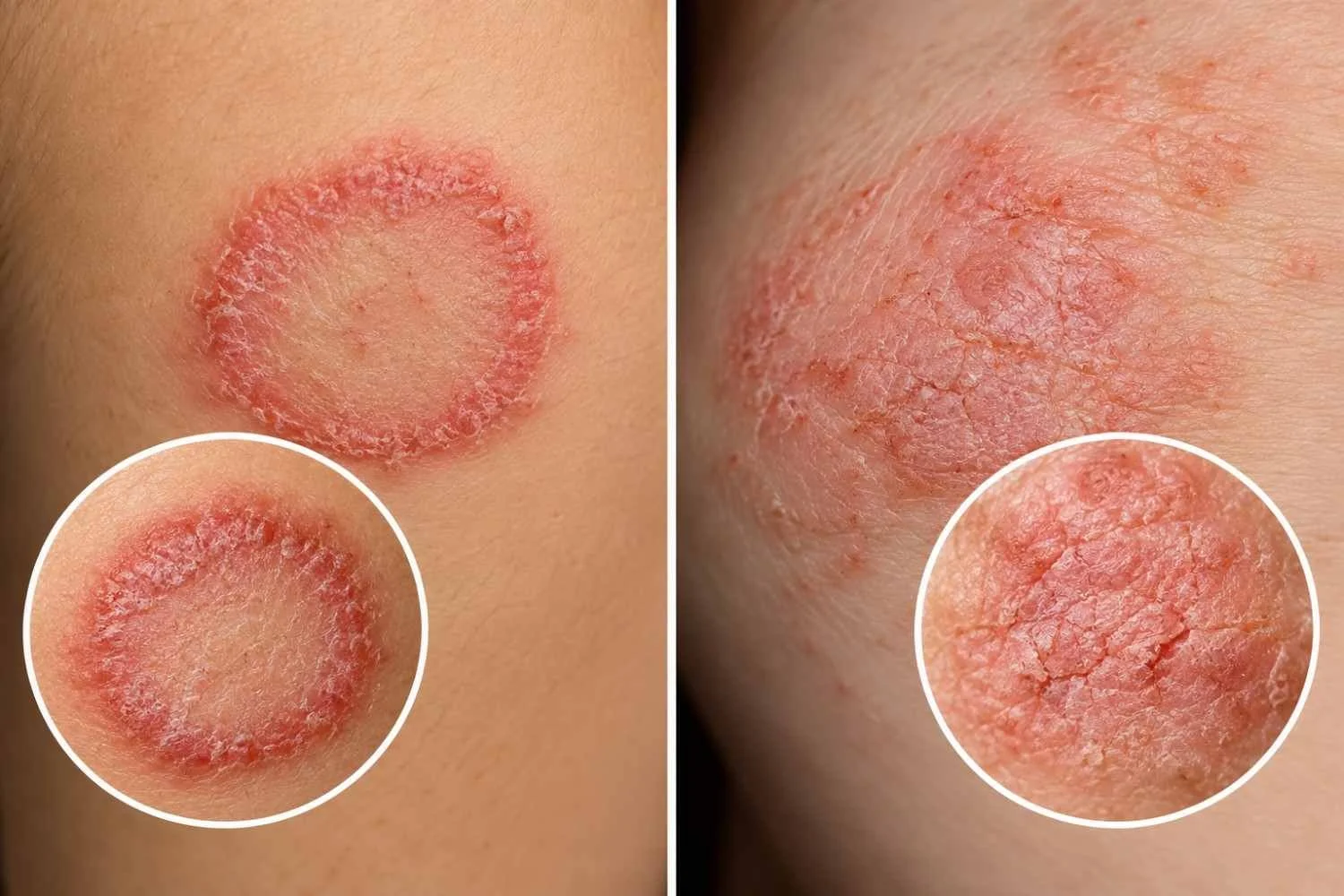
Ringworm (tinea) What it is: Contagious fungal skin infection by dermatophytes. Where: Scalp, body, feet (athlete’s foot), groin (jock itch), nails. Cause: Dermatophyte fungi; spreads by direct contact or shared items. Key signs: Round, scaly, itchy patches; scalp hair loss; discolored/thick nails.
Eczema (atopic dermatitis and others) What it is: Noninfectious inflammatory skin disorder with dry, itchy, red skin. Where: Flexures (inside elbows, behind knees), face, hands, etc. Cause: Genetic, immune and environmental factors. Key signs: Chronic/relapsing dryness, intense itching, red or thickened skin; possible secondary infection.
What Is the Difference Between Ringworm and Eczema?
The main difference is their cause. Ringworm is caused by fungi, while eczema is linked to skin inflammation and a weakened or sensitive skin barrier.
Ringworm often appears as a circular or ring-shaped rash with a clearer centre and a more noticeable edge. Eczema may cause dry, itchy, cracked, scaly, or inflamed skin and can occur in different patterns depending on its type.
Because some symptoms overlap, it is not always possible to identify the condition simply by looking at the rash.
Is Ringworm a Fungal Infection?
Yes. Ringworm is a common fungal skin infection caused by fungi known as dermatophytes. Despite its name, ringworm is not caused by a worm.
It can affect areas such as the:
Arms and legs
Chest and back
Groin
Feet
Scalp
Nails
Ringworm may spread through close skin contact or by sharing items such as towels, clothing, bedding, or personal belongings with an infected person.
What Is Eczema?
Eczema is a group of conditions that can cause dry, itchy, irritated, and inflamed skin. Atopic dermatitis is one of the most common forms.
Eczema can be triggered or worsened by factors such as dry weather, certain soaps or products, allergens, sweating, stress, or irritation. Unlike ringworm, eczema itself is not a contagious infection.
How Can You Tell Ringworm and Eczema Apart?
Although only a qualified healthcare professional can confirm the diagnosis, some general differences may provide useful clues.
| Feature | Ringworm | Eczema |
|---|---|---|
| Main cause | Fungal infection | Skin inflammation |
| Contagious? | Yes, it can spread | No |
| Appearance | Often ring-shaped with a raised/scaly edge | Often dry, red, cracked, or inflamed |
| Itching | Common | Common |
| Can spread? | Yes, especially without appropriate treatment | May spread or flare, but not through infection |
| Treatment | Usually requires antifungal treatment | Treatment depends on the type and severity |
Can Ringworm Look Like Eczema?
Yes. This is one reason people sometimes confuse the two. Both conditions can cause redness, itching, scaling, and discomfort. Using the wrong treatment may delay improvement. For example, applying certain steroid creams to an undiagnosed fungal infection can sometimes alter its appearance and make it harder to identify.
For this reason, persistent or spreading rashes should be assessed by a dermatologist in Jodhpur or another qualified medical professional.
How Is Ringworm Treated?
Ringworm treatment depends on the location and severity of the infection. Antifungal medicines are commonly used, but the appropriate medicine and duration should be decided by a doctor.
If you are looking for ringworm treatment in Jodhpur, professional evaluation can help confirm whether the rash is actually fungal before treatment begins.
A doctor may also advise practical steps such as keeping the affected area clean and dry, avoiding shared towels or clothing, and following the prescribed treatment for the recommended duration.
When Should You See a Ringworm Specialist?
Consider consulting a ringworm specialist in Jodhpur if the rash is spreading, keeps returning, affects the scalp or nails, or does not improve with appropriate care.
A healthcare professional can determine whether you have ringworm or another condition that looks similar.
How Is Eczema Treated?
Eczema treatment focuses on controlling inflammation, reducing itching, and protecting the skin barrier. Treatment can vary according to the type and severity of eczema.
A doctor may recommend moisturisers, prescription medicines, or other measures depending on your individual condition and triggers.
If you need eczema treatment in Jodhpur, consulting an eczema specialist in Jodhpur can help you understand your symptoms and develop an appropriate treatment plan.
Can Eczema Be Completely Cured?
Eczema can often be managed effectively, but it may be a long-term condition for some people, with periods of improvement and flare-ups. Identifying triggers and following an appropriate skincare and treatment routine can help control symptoms.
When Should You Consult a Dermatologist?
You should consider professional evaluation if your skin rash:
Is spreading or becoming more painful
Causes significant itching or discomfort
Keeps coming back
Develops cracks, oozing, or signs of infection
Does not improve with basic skincare
Appears on the scalp, face, or nails
Is difficult to identify or has an unusual appearance
A skin specialist in Jodhpur can examine the affected skin and recommend appropriate care. If the cause is unclear, medical evaluation is particularly important because fungal infections, eczema, allergies, and other skin conditions can sometimes appear alike.
Why Is the Correct Diagnosis Important?
The correct diagnosis is important because different skin conditions require different approaches. Ringworm generally requires antifungal treatment, whereas eczema management focuses on controlling inflammation and maintaining the skin barrier.
If you are searching for skin infection treatment in Jodhpur or fungal infection treatment in Jodhpur, avoid assuming that every itchy or red rash is a fungal infection. Similarly, not every dry or scaly patch is eczema.
Professional guidance can help prevent unnecessary treatment and support appropriate care.
Top 5 FAQs About Ringworm and Eczema
1. What is the main difference between ringworm and eczema?
Ringworm is a contagious fungal infection, while eczema is an inflammatory skin condition and is not contagious.
2. Can eczema turn into ringworm?
Eczema does not turn into ringworm. However, irritated or damaged skin may sometimes be more vulnerable to infections, so a separate fungal infection can occur.
3. Is ringworm always shaped like a ring?
No. Ringworm can have different appearances depending on the body area and the individual. A doctor should confirm the diagnosis rather than relying only on its shape.
4. Can I use the same cream for ringworm and eczema?
No. Treatments are different because the causes are different. Using an unsuitable cream, particularly without medical advice, may worsen or mask some skin conditions.
5. When should I visit a dermatologist for a skin rash?
If a rash is persistent, spreading, recurrent, very itchy, painful, or not improving with basic care, consult a dermatologist in Jodhpur for proper evaluation.
Get Expert Skin Care at JMCH
If you are dealing with a persistent rash, itching, scaling, or other skin concerns, getting the right diagnosis is the first step toward appropriate treatment. At JMCH, patients in Jodhpur can seek professional medical guidance for a range of skin-related concerns.
Do not rely on self-diagnosis when ringworm and eczema can look similar. Consult a qualified doctor or skin specialist and follow the treatment recommended specifically for your condition.
Medical Disclaimer
This blog has been written for general informational and educational purposes only. It is not a substitute for professional medical advice, diagnosis, or treatment. Every patient and skin condition can be different. Please consult a qualified doctor or dermatologist for proper evaluation and follow the treatment and medication instructions recommended by your healthcare professional. Do not start, stop, or change any medicine on your own or based on information provided in this blog.
Read More: Cancer Diagnosis Ke Liye CT Scan, MRI Aur PET Scan Mein Kya Difference Hai


