
Stomach Pain After Eating? It Could Be Gallbladder Stones
Introduction
You've just finished lunch — maybe something a little oily, or a rich meal at a family gathering. Within an hour, there's a sharp, cramping pain in your upper right abdomen, sometimes radiating towards your back or right shoulder. You feel nauseous, bloated, and uncomfortable.
You might be blaming the food, or the cooking oil, or something you ate that didn't agree with you. But if this is happening repeatedly after meals — especially fatty ones — your gallbladder deserves a closer look.
Gallbladder stones, also called gallstones or 'patthari' in common usage, are one of the most common digestive conditions in India. They affect roughly 12% of adults globally, and in India, certain groups — particularly middle-aged women and people with obesity — face even higher rates. The good news is that when caught and managed correctly, gallstones are very treatable.
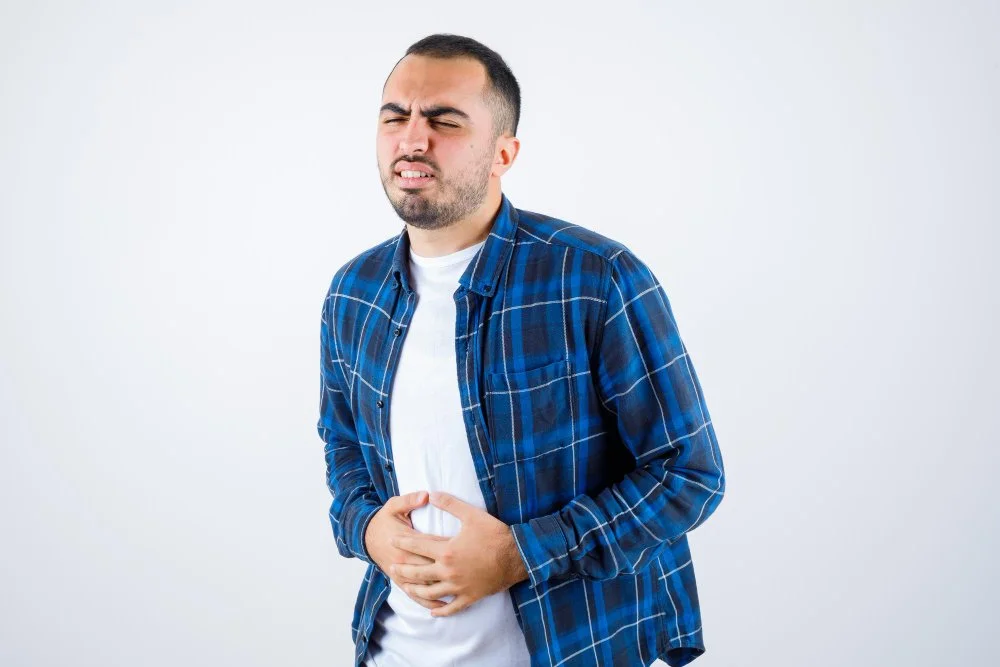
Gallbladder stones, also called gallstones or 'patthari' in common usage, are one of the most common digestive conditions in India. They affect roughly 12% of adults globally, and in India, certain groups — particularly middle-aged women and people with obesity — face even higher rates. The good news is that when caught and managed correctly, gallstones are very treatable.
What You'll Learn
• What the gallbladder does and why stones form
• The 6 most common signs that point to gallstones
• Who is most likely to develop them
• How they're diagnosed and what treatment options look like
• When you actually need surgery — and what it involves
What Does the Gallbladder Actually Do?
Your gallbladder is a small, pear-shaped organ tucked just under your liver on the right side of your abdomen. Its job is to store bile — a digestive fluid made by the liver that helps break down fat in the food you eat.
When you eat something fatty, your gallbladder squeezes and releases bile into your small intestine to help digestion. Simple, elegant, and usually problem-free.
Problems begin when the chemical balance of bile is disrupted — most commonly when there's too much cholesterol in it. Over time, this cholesterol can crystallise and form stones. These stones range in size from a tiny grain of sand to as large as a golf ball.
How Do You Know If You Have Gallstones? 6 Signs to Watch For
1. Pain After Fatty or Oily Meals
This is the most classic sign. The pain usually comes on 30–60 minutes after eating something fatty. It's felt in the upper right abdomen, can radiate to the back or between the shoulder blades, and typically lasts anywhere from 30 minutes to a few hours. It might come and go over weeks or months before it becomes severe.
2. Nausea and Vomiting Alongside the Pain
The pain is often accompanied by feeling sick to your stomach or actually being sick. Many people mistake this for food poisoning — especially the first time it happens.
3. Pain After Large Meals or Late-Night Eating
Gallbladder attacks often happen after a particularly large meal or late at night. The timing isn't random — it's the gallbladder working hard after a big fat load and a stone getting temporarily stuck.
4. Yellowing of Skin or Eyes (Jaundice)
This is a more serious sign. If a stone slips out of the gallbladder and blocks the bile duct, bile backs up into the bloodstream, causing the skin and whites of the eyes to turn yellow. This needs urgent medical attention.
5. Fever and Chills
If the gallbladder becomes infected — called cholecystitis — you'll likely develop a fever along with the pain. This is a medical emergency. Don't wait to see if it settles.
6. Lighter-Coloured Stools and Dark Urine
If bile isn't reaching the intestine properly, stools can turn a clay-like pale colour. At the same time, bile pigments may end up in the urine, turning it unusually dark. These together with jaundice are signs of a blocked bile duct that needs prompt investigation.
Who Is Most Likely to Get Gallstones?
The traditional medical teaching uses the 'Four Fs' — Female, Forty, Fat, Fertile — as the classic risk profile. And while this is an oversimplification, it contains truth: gallstones are 2–3 times more common in women than men, and risk increases with age and excess weight.
In India specifically, rapid weight loss (including after bariatric surgery, crash diets or very low-calorie diets) significantly increases gallstone risk. The NIDDK explains that when you lose weight very quickly, the liver releases extra cholesterol into bile, which can form stones. People with diabetes, those who eat a high-fat diet, and people who sit for long hours are also at higher risk.
Many Gallstones Don't Cause Any Symptoms at All
Here's something that surprises most people: the majority of gallstones never cause a single symptom. They're discovered incidentally on an abdominal ultrasound done for something else entirely. These 'silent' gallstones generally don't need treatment — just monitoring.
It's the symptomatic gallstones — the ones causing the attacks we described — that typically require intervention.
How Are Gallstones Diagnosed?
An abdominal ultrasound is the first and most important test. It's painless, takes about 10–15 minutes and can usually detect gallstones very clearly. Blood tests help check for infection, inflammation or bile duct involvement. If there's concern about a stone in the bile duct, an MRCP scan gives a detailed picture.
At JIET Hospital, our non-clinical diagnostic team can arrange these tests quickly, and our surgical team provides rapid follow-up consultations.
Treatment — What Are the Options?
For asymptomatic gallstones discovered incidentally, most doctors advise watchful waiting. No surgery needed unless symptoms develop.
For symptomatic gallstones — especially those causing recurring attacks — surgery is usually the recommended and definitive treatment. The procedure is called a Laparoscopic Cholecystectomy, which means removing the gallbladder through small keyhole incisions. You don't need your gallbladder to live a completely normal life — the liver continues producing bile, which simply drains directly into the intestine.
The procedure takes about 30–60 minutes; you typically go home the same day or the next day, and most people are back to their normal routine within a week. It's one of the most commonly performed and safest surgeries in the world.
Medications exist that can slowly dissolve certain types of small gallstones, but they work only in specific situations, take months or years, and stones tend to return once medication is stopped. They're rarely the first choice for symptomatic gallstones.
When Is It a Medical Emergency?
Go to the Emergency Department immediately if your gallbladder pain is accompanied by a high fever and chills, if you develop jaundice (yellow skin or eyes), if the pain becomes severe and constant rather than coming in waves, or if you've had surgery recently and develop sudden abdominal pain. These are signs of complications — infection, blocked bile duct, or pancreatitis — that need urgent treatment.
JIET Hospital's Emergency servicesare available 24 hours a day, 7 days a week.
Why Choose JIET Hospital for Gallbladder Surgery
At JIET Hospital & Medical College, Jodhpur, our experienced surgical team performs laparoscopic cholecystectomy routinely with excellent outcomes. Our Operation Theater is equipped to the highest standards, and our pre- and post-operative care ensures a smooth, safe experience. Patients under Rajasthan Government Health Scheme and Ayushman Arogya Yojana can access this surgery within the scheme.
Frequently Asked Questions
Q1: Can gallstones go away on their own?
Very small gallstones occasionally dissolve on their own, but this is uncommon. Most gallstones, once formed, are permanent unless surgically removed or dissolved with medication (which works only for certain types and takes a long time).
Q2: Is gallbladder surgery (cholecystectomy) dangerous?
Laparoscopic cholecystectomy is one of the safest, most commonly performed surgeries in the world. Complications are rare when performed by an experienced team. Most patients go home the next day and recover fully within a week.
Q3: Can I live normally without a gallbladder?
Yes — the vast majority of people who have their gallbladder removed live completely normally. The liver still produces bile; it just flows directly into the intestine rather than being stored. Some people notice loose stools for a few weeks after surgery, but this typically settles.
Q4: Will avoiding fatty food prevent gallstone attacks?
A low-fat diet can reduce the frequency and severity of gallstone attacks, because the gallbladder doesn't contract as much when you eat less fat. But it doesn't remove the stones. For symptomatic gallstones, diet modification buys time but is not a long-term solution.
Q5: I have gallstones but no symptoms. Do I need surgery?
Usually not immediately. 'Watchful waiting' is the standard approach for asymptomatic gallstones. Your doctor will advise surgery if symptoms develop or if there are specific risk factors that make complications more likely.
Final Thoughts
That pain after a fatty meal might have been something you've been putting up with for months. It doesn't have to be. Gallstones are common, well-understood and very treatable. The earlier you find out what's going on, the simpler the solution tends to be.
If you're experiencing recurring abdominal pain after eating, get an ultrasound. It takes 15 minutes and gives you real answers.
Book your assessment at JIET Hospital, Jodhpur, today.
Medical Disclaimer: This blog is for general health awareness only. Please consult a qualified bariatric surgeon or general surgeon for diagnosis and treatment.


