
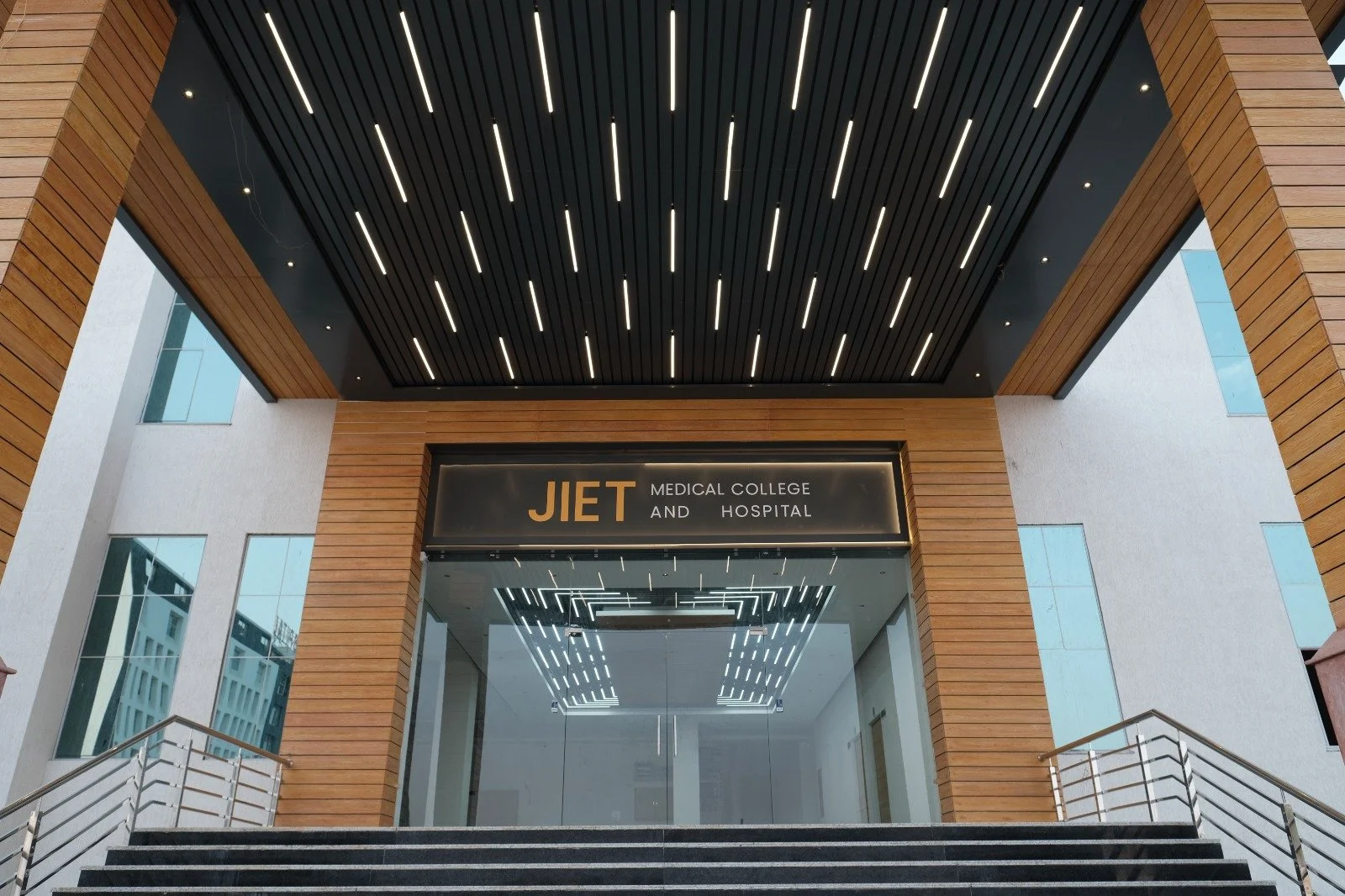
Science that explains. Teaching that shows.
Eight non-clinical departments where future doctors learn how the body is built, how it works, how disease starts and how treatment acts.
No department matches that search. Try a shorter name.
NON-Clinical DepartmentsFind the right department
Pick a learning cluster or search by name, then open a card to see what students study.
Infographic · The big picture
The sciences
every clinical
department relies on
Every ward diagnosis rests on these eight subjects. Hover a department to see it light up.
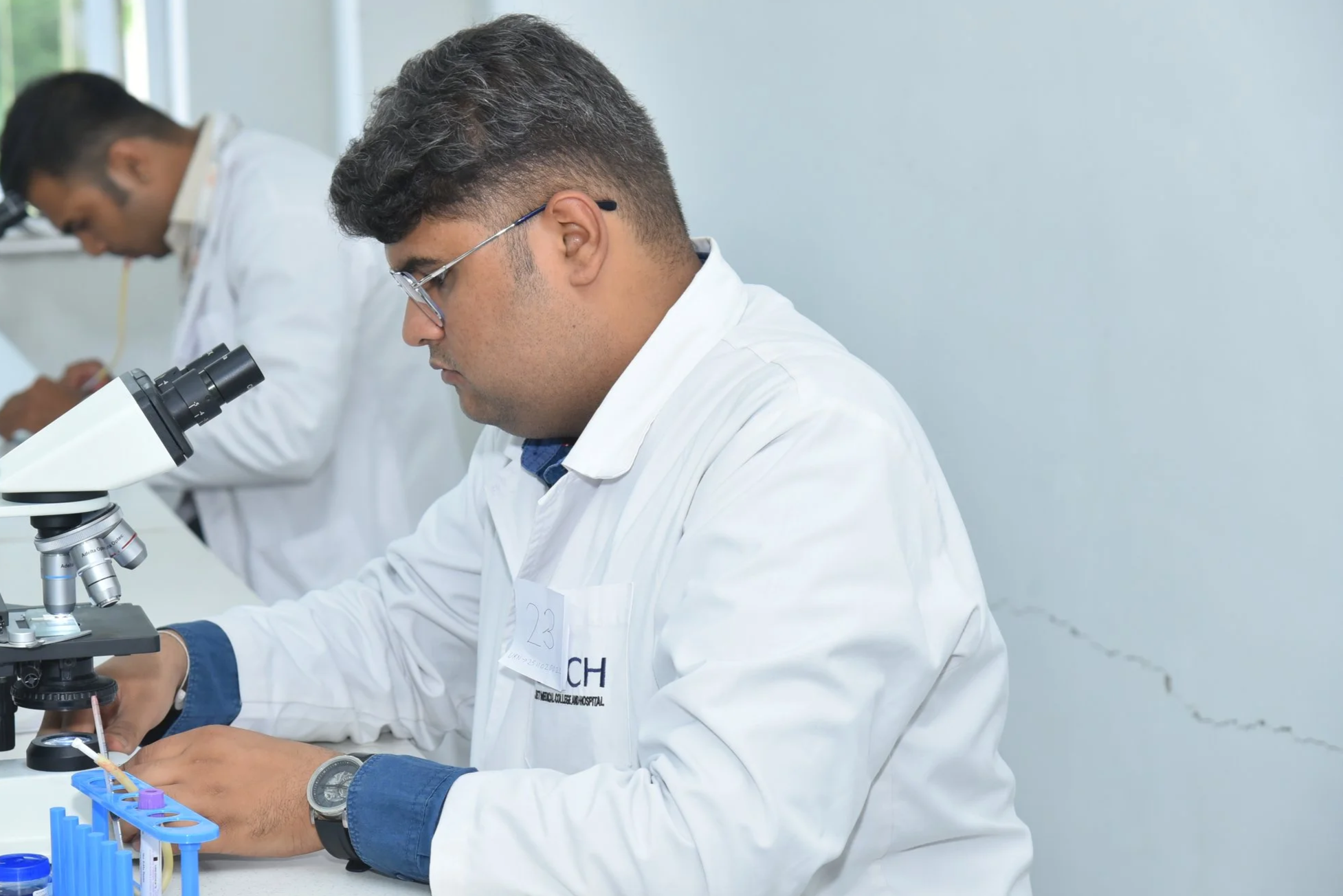
From a single molecule to a whole community
Each department studies medicine at a different scale, from an enzyme to a public health programme.
Chemistry of life
Enzymes, metabolism and genes.
BiochemistrySeeing the cause
Microbes, immunity and tissue change under the microscope.
Microbiology · PathologyStructure and function
How organs are built and how they work together.
Anatomy · PhysiologyTreating disease
How drugs act and how to prescribe them safely.
PharmacologyHealth of populations
Prevention, epidemiology and public health.
Community MedicineMedicine and justice
Medico-legal practice, toxicology and ethics.
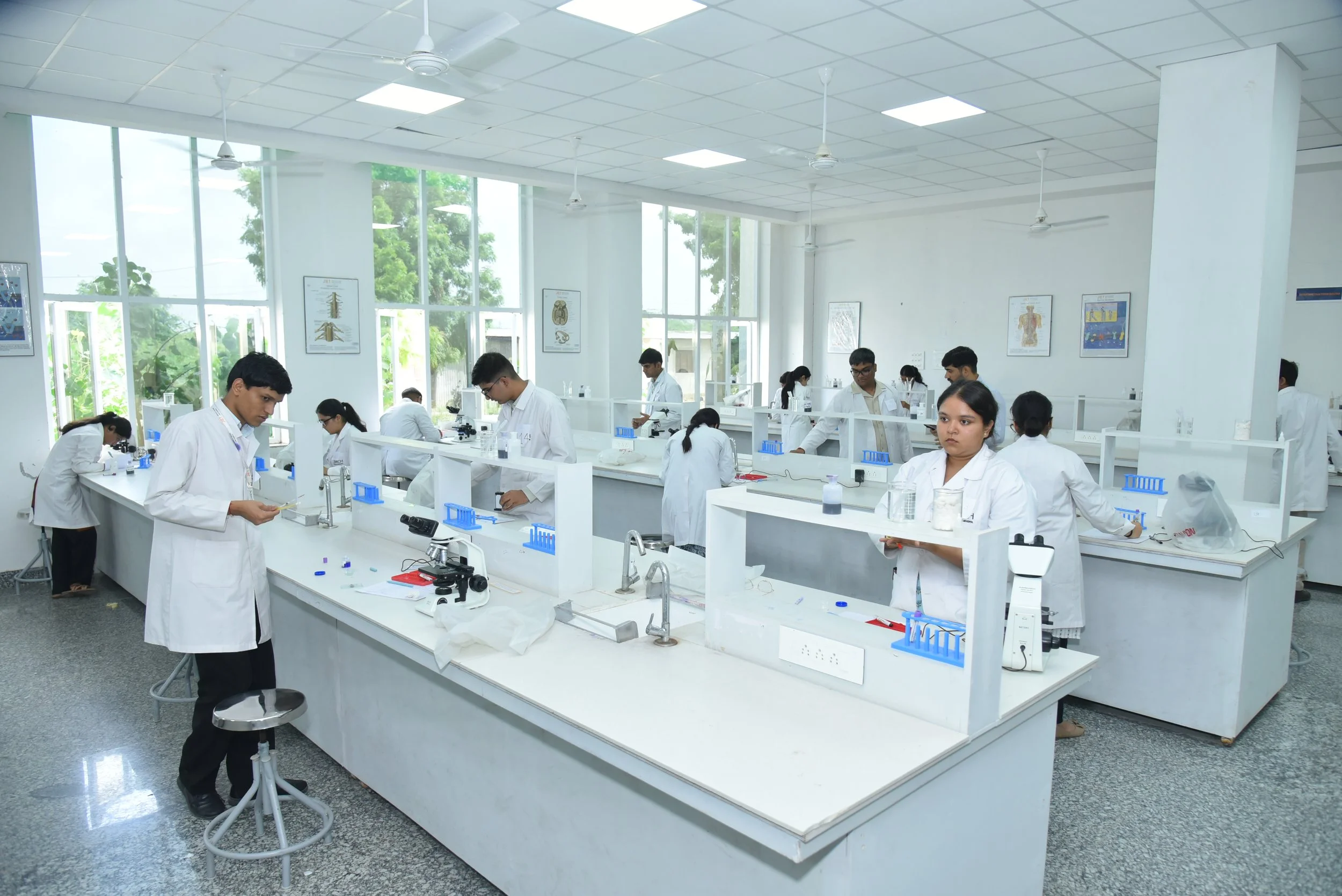
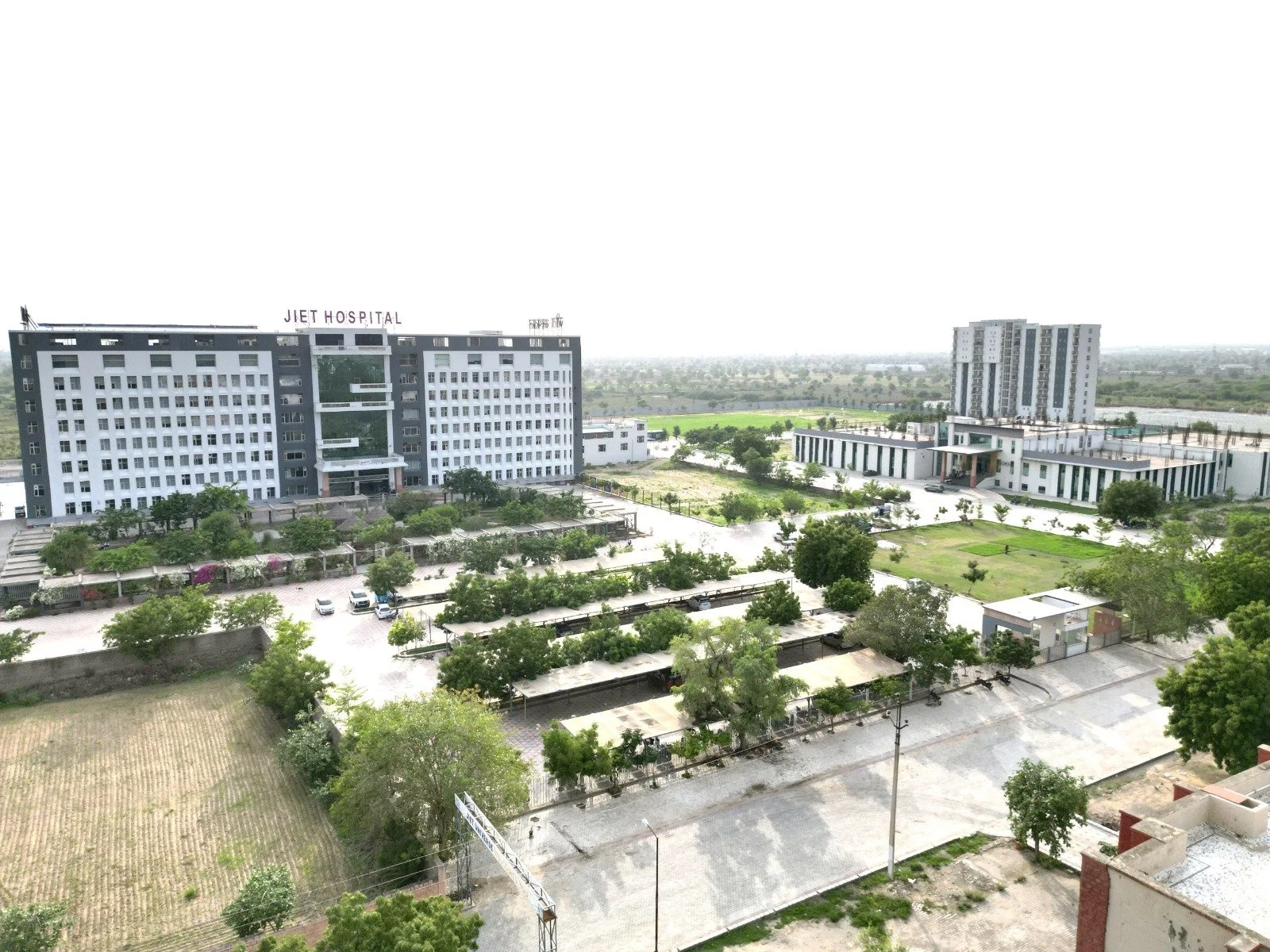
Forensic MedicineLearning environmentLearning with your hands as well as your head
Practical hours at the microscope and the laboratory bench teach students to observe closely and record accurately.
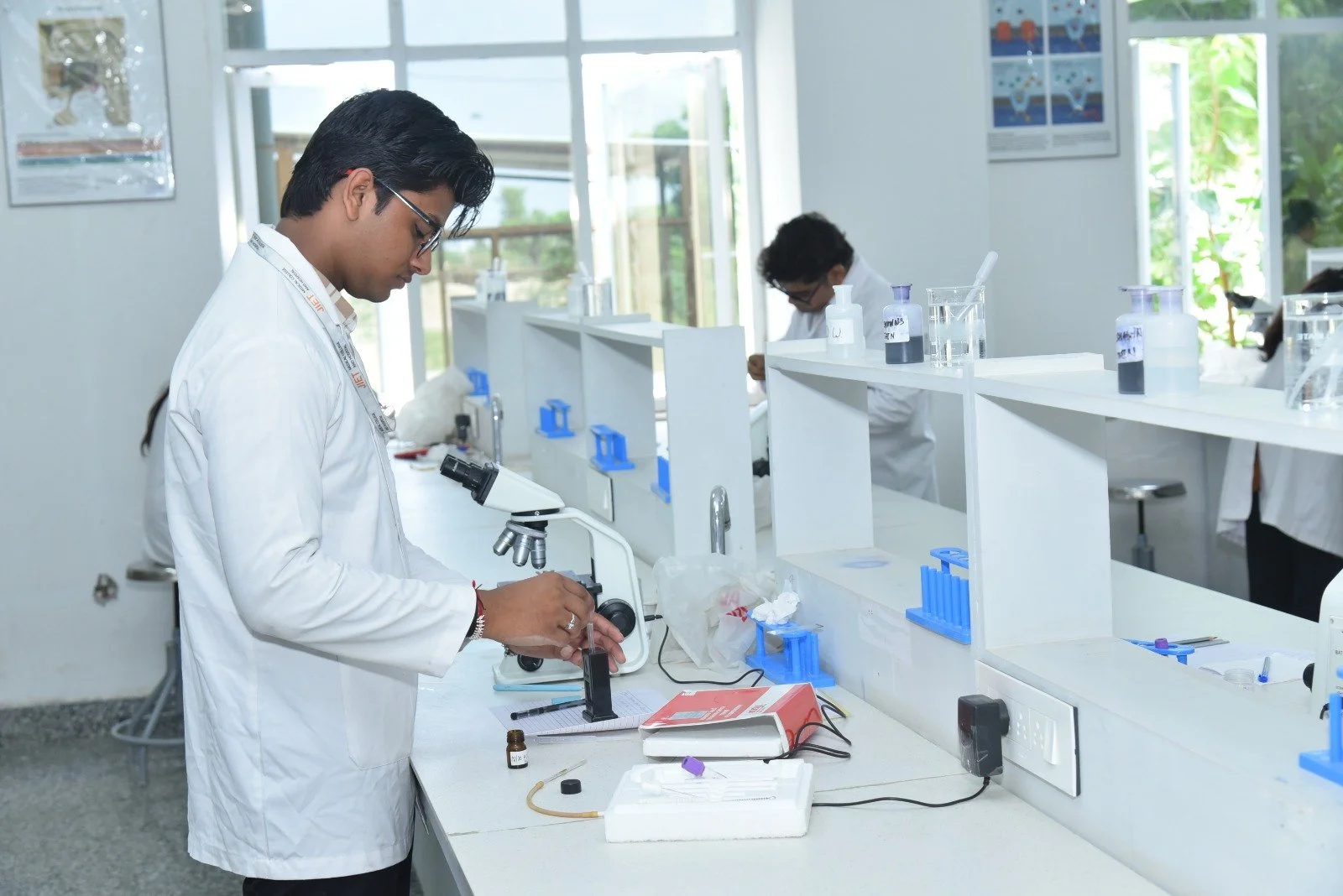
Observe
Slides, specimens and models make the textbook visible.
Measure
Experiments and laboratory tests teach students to trust data.
Connect
Every topic is tied back to a patient, so the science stays relevant in the wards.
Visit us
Talk to a department today
Call the hospital desk or the medical college office and we will point you to the right team.